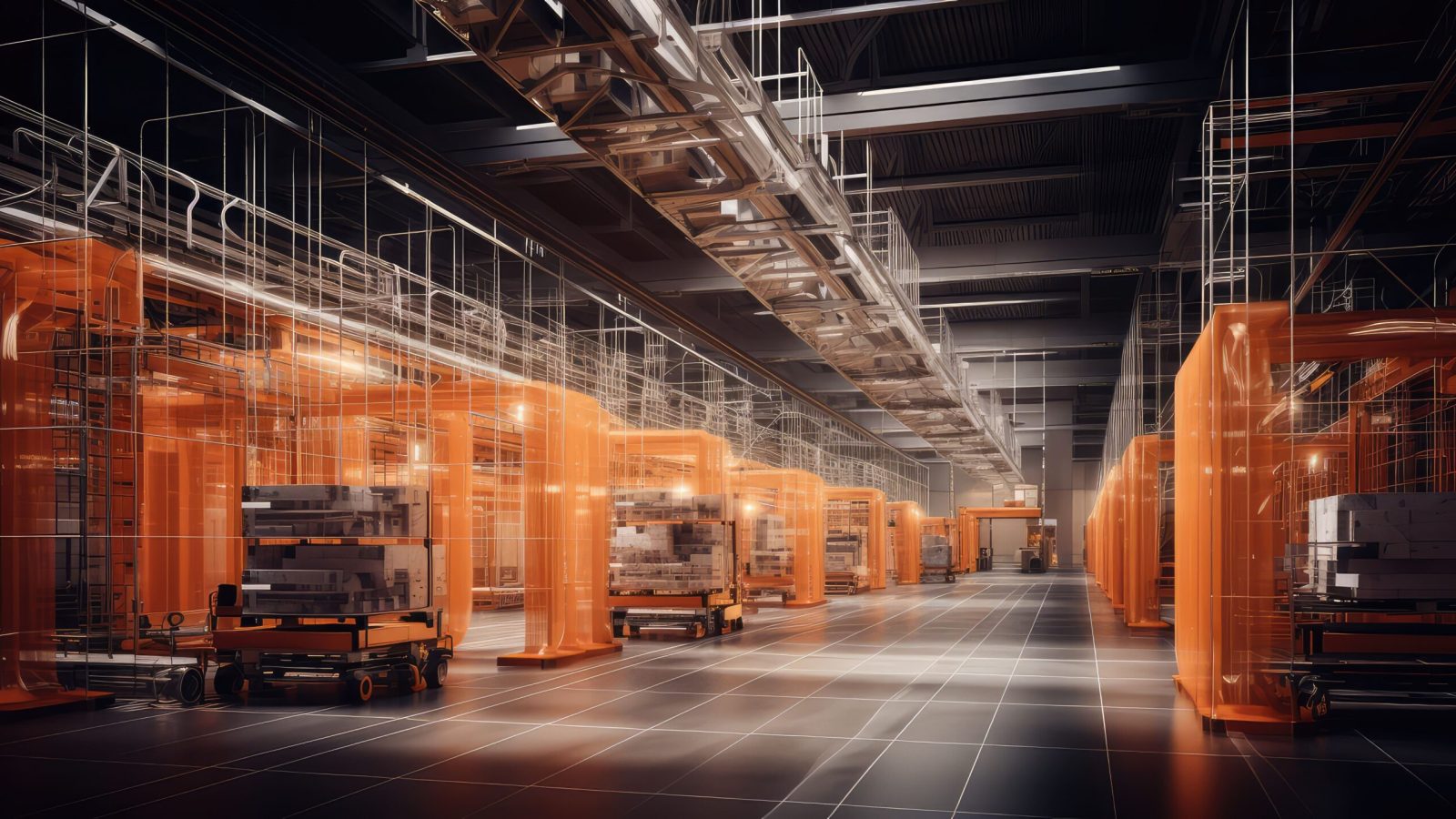
Many companies are currently facing a similar situation: existing logistics sites continue to operate reliably, while at the same time the demands for flexibility, transparency, and integration capabilities are increasing significantly. New processes must be implemented faster, additional automation technologies integrated, and existing systems connected more closely. At the same time, long-established infrastructure is increasingly reaching its limits.
This naturally raises a key question: Does it still make economic sense to modernize existing infrastructure, or would a complete greenfield replacement be more viable in the long term?
At this point, retrofit decisions are often oversimplified. The choice between modernization and replacement has become far more complex than a purely investment-based calculation. In many projects, the core issue is not the technical performance of existing systems, but rather how economically and flexibly long-established structures can continue to evolve. Evaluating retrofit therefore goes far beyond technology alone.
Why Traditional ROI Assessments Often Fall Short
Many companies initially evaluate retrofit based on obvious criteria such as system age, maintenance costs, spare part availability, or capital investment requirements. While these factors are important, they are often insufficient for a meaningful assessment.
The real economic impact frequently emerges elsewhere. Processes become increasingly difficult to adapt, integrating new systems requires growing effort, and operational changes create extensive internal coordination and project costs. At the same time, many long-established environments become increasingly dependent on specialized expertise or individual external service providers. These indirect effects are often underestimated in traditional economic evaluations.
Consulting projects repeatedly show that companies either continue operating existing infrastructure unchanged for too long or begin considering complete replacement prematurely, even though targeted modernization would often be economically far more reasonable. A meaningful retrofit assessment must therefore evaluate operational, technical, and strategic factors together.
Five Signs That Retrofit May Make Economic Sense
Not every existing system requires complete replacement. At the same time, not every retrofit project is automatically economically viable. In practice, however, several recurring patterns often indicate strong retrofit potential.
- The Mechanical Infrastructure Remains Stable
Many systems continue to deliver strong mechanical performance for years. Conveyor systems, warehouse equipment, and material flows often have significantly longer life cycles than control systems or software layers. When the mechanical foundation remains stable, the primary modernization need often lies in transparency, integration, or system control.
- Operational Changes Are Becoming Increasingly Complex
A common warning sign is the growing effort required for adjustments. New processes demand long implementation times, expansions create extensive coordination requirements, or modifications deeply affect existing system logic. In many cases, this reflects less of a technology issue and more of a structural complexity problem within the existing infrastructure.
- Spare Parts and Expertise Are Becoming Critical
Many companies underestimate the economic risks associated with declining availability. When control systems are discontinued, critical expertise is concentrated among a few individuals, or external service providers become increasingly difficult to find, operational risk often rises much faster than expected.
- New Technologies Are Difficult to Integrate
Modern logistics environments require far greater integration capabilities than they did only a few years ago. If additional automation systems, new software platforms, or data-driven solutions can only be integrated with significant effort, structural modernization requirements often emerge.
- A Complete Greenfield Project Would Be Operationally Difficult
Especially in active logistics operations, greenfield projects are often difficult to execute. Long project durations, complex migration phases, and high operational risks frequently make step-by-step modernization the more economically viable option.
Evaluating Retrofit Economically: The Critical Questions
In practice, a structured initial assessment is often enough to evaluate retrofit potential more realistically. The decisive factor is usually not the isolated age of individual components, but rather identifying which areas of the existing infrastructure currently limit operational flexibility.
Key questions include:
- Which parts of the existing infrastructure currently limit operational flexibility?
- Where do the greatest risks within the current system landscape exist?
- Which processes are becoming increasingly difficult to adapt or expand?
- Which components are driving rising maintenance or integration costs?
- Where are dependencies on specialized expertise or individual service providers becoming critical?
- Which investments merely extend existing operational lifetimes?
- Which measures actually create long-term adaptability?
The distinction between short-term stabilization and long-term adaptability is often underestimated. Not every modernization effort automatically creates sustainable value. The decisive factor is whether retrofit genuinely makes existing structures more flexible and economically adaptable in the long run.
Why Step-by-Step Modernization Is Often More Economical
Many companies initially view modernization as a single large-scale project. In practice, however, phased retrofit strategies are often far easier to manage economically and operationally.
Individual areas are modernized based on priority, operational risks are systematically reduced, and existing processes continue to evolve in a controlled way. This results in shorter project durations, improved investment control, and early operational improvements that become visible within day-to-day operations. Particularly in complex brownfield environments, this creates a significant advantage. Companies can align modernization efforts with actual operational requirements instead of replacing entire infrastructures within one large transformation project.
Modernization Begins With Transparency
Many retrofit decisions are made too late or based on incomplete information. Companies often react only once technical risks become visible or operational limitations increase significantly.
From a consulting perspective, economically meaningful modernization therefore begins with transparency regarding the actual starting situation. Only when companies clearly understand which systems remain sustainable in the long term, where structural limitations exist, and which dependencies create operational risks can they determine which retrofit strategy is economically viable.
Conclusion: Retrofit Is a Strategic Investment Decision
The decision between modernization and complete replacement can rarely be answered with a simple rule today. Many existing systems still deliver strong operational performance while increasingly struggling with flexibility, integration, or transparency requirements. Companies that evaluate retrofit strategically create an important competitive advantage. They prioritize investments more effectively, reduce operational risks, and avoid unnecessary complexity within their infrastructure.
Retrofit is therefore no longer simply a cost question. Increasingly, the critical issue is how economically existing logistics structures can adapt to future operational requirements.
The Next Step: Structurally Evaluate Retrofit Potential
Many companies already recognize that modernization will become necessary, but lack a reliable foundation for investment decisions. A structured analysis of existing processes, systems, and technical dependencies creates the transparency required to evaluate retrofit potential realistically and prioritize investments strategically.
If you would like to assess whether retrofit makes economic sense for your existing infrastructure and which modernization steps would create the greatest operational value, speak with us.
EPG Consulting supports companies in strategically modernizing existing logistics structures and turning retrofit into a manageable long-term transformation approach.