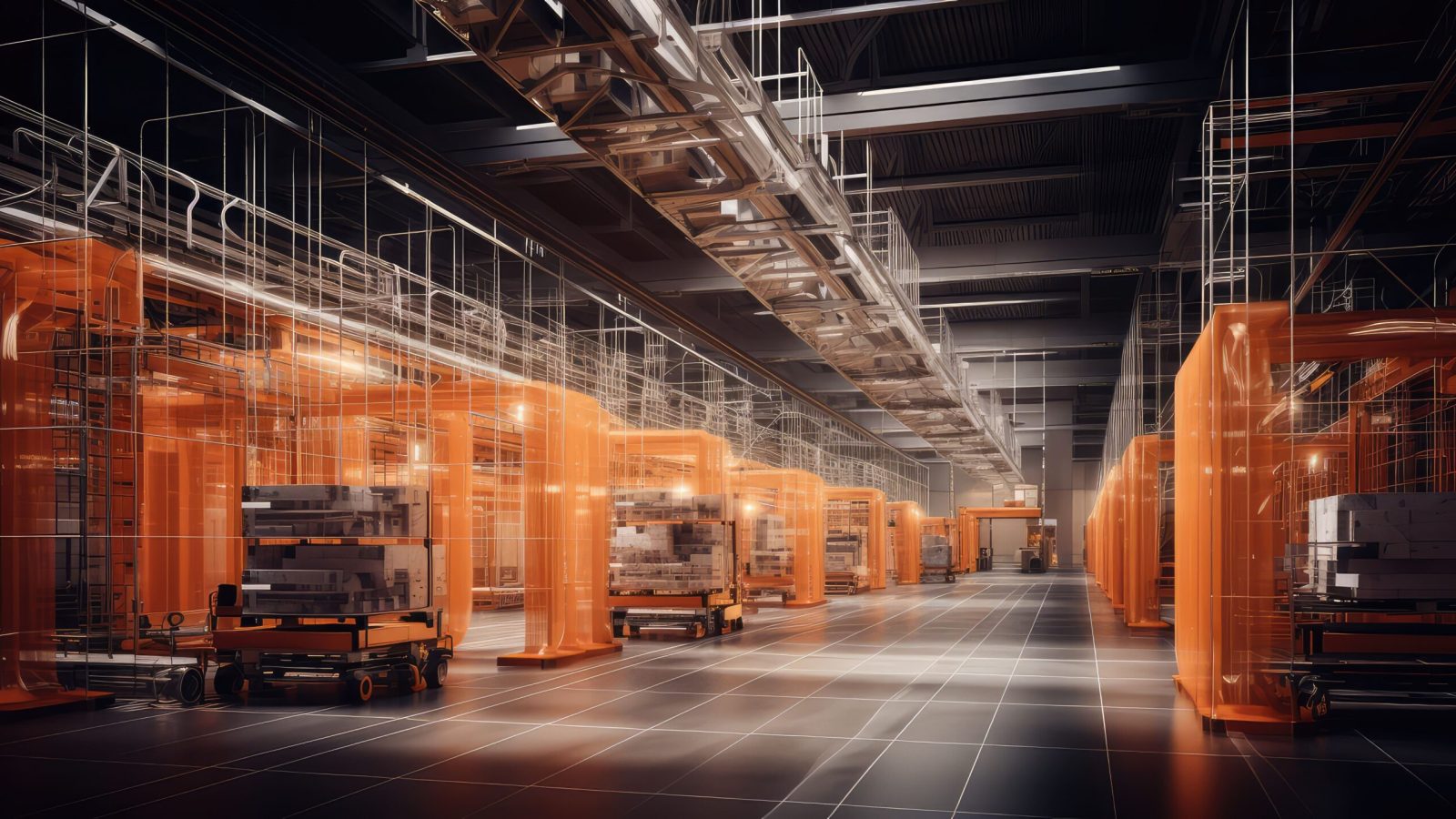
At many logistics sites, the mechanical infrastructure continues to operate reliably even after years of use. Conveyor systems run steadily, storage and retrieval machines operate precisely, and material flows remain stable in day-to-day operations. At the same time, however, many companies are increasingly running into limitations, even though the actual equipment still appears technically capable. In many cases, the reason no longer lies in the mechanics themselves.
Instead, the real challenges often emerge within the surrounding system landscape. Control systems originate from different technology generations, interfaces have been expanded over many years, and process logic has been adapted incrementally over time. As a result, structural complexity continues to grow in the background, even while daily operations initially remain stable.
What makes this particularly problematic is that the development often remains invisible for a long time. Many companies only recognize the real bottlenecks once changes suddenly become disproportionately complex or new requirements can only be implemented with significant risk. That is precisely why it is worth identifying typical warning signs early.
Warning Sign 1: Even Small Changes Suddenly Become Complex
A common pattern in long-established system environments appears during routine operational adjustments. Processes that were once relatively easy to modify suddenly create extensive coordination efforts between IT, engineering, operations, and external service providers. New process steps require long preparation times, smaller adjustments unexpectedly affect deeply connected workflows, or modifications trigger side effects in other system areas.
In practice, this often reflects not a purely technical issue, but rather structural complexity that has grown over many years. Systems have become so tightly interconnected that changes are no longer easily predictable. This point is frequently underestimated. Operational stability in daily business does not automatically mean that existing structures remain flexible in the long term.
Warning Sign 2: Critical Knowledge Is Concentrated in Individual People
Many companies are familiar with situations where certain system changes or troubleshooting activities can only be handled by a few specific employees or external specialists. This becomes especially critical when historically grown interfaces, individual custom logic, or older control layers are only partially documented. In these cases, the actual system understanding often no longer exists within the organization itself, but solely within the experience and knowledge of individual people.
Retrofit projects repeatedly show that this creates substantial operational risks. The more infrastructure depends on individual expertise, the more difficult future expansions, integrations, or modernization efforts become. In complex brownfield environments, the lack of transparency often turns into the real modernization problem.
Warning Sign 3: New Technologies Create Disproportionate Effort
Modern logistics environments require far greater integration capabilities than they did only a few years ago. Additional automation, new software platforms, visibility tools, and data-driven process management solutions are expected to integrate flexibly into existing operations. Many companies discover, however, that these integrations are becoming increasingly difficult.
New systems require extensive custom modifications, interfaces must be expanded manually, or existing process logic limits future scalability. This often creates a paradoxical situation: the mechanical infrastructure itself would still be fully capable, yet the surrounding system landscape prevents further economic development. This is often a very clear indication that the actual limitation no longer lies within the physical equipment.
Warning Sign 4: Transparency Over System Dependencies Is Missing
The more logistics environments evolve over many years, the more difficult it often becomes to understand existing dependencies. Which systems affect one another? Which processes are interconnected? Which interfaces create risks during changes? In many companies, these questions can no longer be answered clearly.
This becomes especially problematic during modernization projects. A lack of transparency significantly increases operational risk. Even smaller adjustments may create unexpected consequences in other areas because relationships within the system landscape are no longer fully understood.
In practice, this often leads to growing hesitation toward change. Processes remain untouched because the risks associated with modifications appear increasingly difficult to predict. This condition is frequently a strong sign that retrofit is no longer simply a technical issue.
Why the Real Challenge Often Lies Within the System Landscape
Many companies begin retrofit initiatives assuming that their existing equipment is technically outdated. In practice, however, the reality is often very different. Mechanical infrastructure frequently remains highly capable. The real challenges arise instead within control systems, integrations, and software structures.
The issue rarely lies in isolated components. The real problem is usually the interaction between system landscapes that have evolved over many years. Different control layers, individual extensions, and increasingly complex interfaces create dependencies that limit operational flexibility. This is why the focus of many retrofit projects has shifted significantly. While modernization once centered primarily on mechanical upgrades, the emphasis today increasingly lies on transparency, simplification, and the long-term adaptability of existing systems.
The Key Question Is Not “What Is Old?” but “What Prevents Change?”
In practice, even a structured assessment of existing system landscapes can already provide valuable clarity.
Key questions include:
- Which processes are becoming increasingly difficult to change?
- Where do the greatest integration efforts arise?
- Which systems create strong dependencies?
- Where is transparency over interfaces missing?
- Which areas depend heavily on individual expert knowledge?
- Which structures limit future automation or scalability?
This perspective often fundamentally changes how existing infrastructure is evaluated. Not every older system needs to be replaced completely. At the same time, modern technology alone does not automatically create a flexible system landscape. The decisive factor is whether existing structures remain manageable, transparent, and adaptable over the long term.
Conclusion: The Biggest Risks Often Develop Invisibly
Many companies only begin focusing seriously on retrofit once technical risks have already become visible. In practice, however, the real problems usually begin much earlier. Changes gradually become more complex, dependencies continue to grow, and transparency within the system landscape slowly decreases. That is why recognizing structural warning signs early is increasingly important.
The future viability of logistics infrastructure is no longer determined solely by the mechanical performance of existing systems. Increasingly, success depends on how flexibly, transparently, and efficiently existing environments can continue to evolve.
The Next Step: Analyze System Landscapes Structurally
Many companies already sense that their existing structures are making change increasingly difficult, but lack a transparent assessment of their actual system complexity. A structured analysis of control layers, interfaces, and process dependencies creates clarity. It helps identify operational risks and prioritize meaningful modernization steps strategically.
If you would like to evaluate which areas of your existing infrastructure are creating long-term modernization pressure and how system complexity can be reduced in a controlled way, speak with us.
EPG Consulting supports companies in systematically evolving existing logistics structures to remain technically and operationally future-ready.